Riding Algorithms: How Data Science Is Changing the Way Surfers Find Their Waves
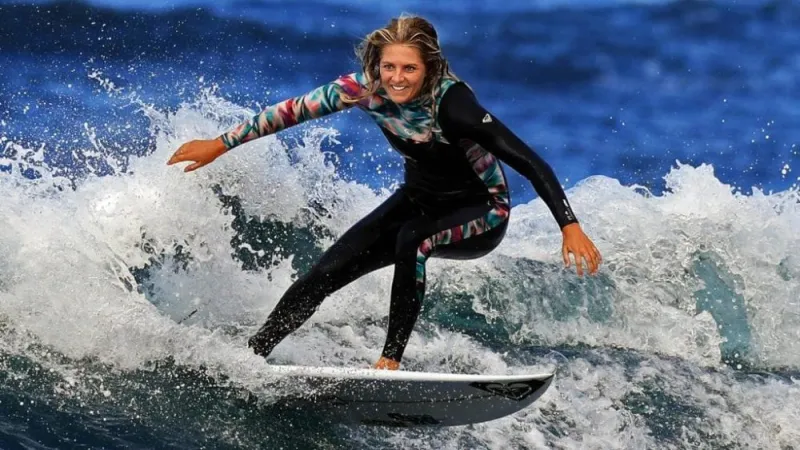
Photo: surfer checking phone app ocean waves forecast beach, via beachbrella.com
When the Ocean Becomes a Spreadsheet
There's an old ritual most surfers know well. You roll out of bed before dawn, shuffle to the window, and just look. Maybe you check the trees for wind. Maybe you text your buddy who lives closer to the beach. For decades, that gut-feeling guesswork was half the adventure — showing up and taking whatever the ocean decided to give you.
These days, though, a growing chunk of the surf community is doing something a little different before they ever touch their board. They're pulling up dashboards, cross-referencing buoy readouts, and letting machine learning models tell them exactly which beach is going to fire — and at what tide.
Welcome to the swell forecast revolution. It's reshaping how Americans chase waves, and it's sparking a genuinely interesting debate about what surf culture is actually supposed to feel like.
From Buoys to Algorithms
The bones of modern surf forecasting aren't entirely new. The National Oceanic and Atmospheric Administration (NOAA) has been deploying offshore buoys since the 1970s, collecting wave height, period, and direction data around the clock. What's changed is what we're able to do with all that information.
Apps like Surfline, Magic Seaweed, and Windguru have been around long enough that most surfers take them for granted. But under the hood, these platforms have quietly gotten a lot more sophisticated. They're no longer just reading raw buoy outputs — they're running proprietary models that factor in local bathymetry (the shape of the seafloor), coastal geography, tidal shifts, and atmospheric pressure systems simultaneously.
Surfline's LOLA system, for example, uses a network of high-definition cameras combined with machine learning to analyze real-time surf conditions at hundreds of spots across the country. The algorithm learns over time, getting better at predicting how a particular break will respond to a given swell direction and size. It's the kind of precision that would have seemed like science fiction to the guys who shaped the original California surf scene.
"The models we're working with now can differentiate between a swell that's going to produce clean six-foot faces at a point break versus one that's going to close out and be totally unsurfable," says one independent meteorologist who consults for a mid-size forecasting startup. "Five years ago, that level of granularity just wasn't available to regular surfers."
The DIY Forecasters
What's really exciting — and very on-brand for surf culture — is that the data revolution isn't just happening inside big tech companies. A scrappy community of self-taught forecasters has emerged, sharing knowledge on forums, Discord servers, and YouTube channels dedicated entirely to reading swell models.
Take the community that's grown up around Windyty (now Windy.com), a visualization tool originally built for pilots and sailors. Surfers latched onto it because it lets you watch animated weather systems roll across the Pacific in near-real time. On surf forums from Santa Cruz to Virginia Beach, you'll find threads where regular people — teachers, tradespeople, retirees — are dissecting GFS and European weather models like seasoned meteorologists.
Mike, a software engineer and weekend surfer based in San Diego, built his own personal forecasting dashboard that pulls live data from multiple NOAA buoys and overlays it against historical swell patterns at his three favorite breaks. "I'm not trying to go pro," he laughs. "I just got tired of driving an hour to find onshore slop. Now I only go when I'm pretty confident it's going to be worth it."
That kind of hyper-personalized forecasting is becoming more common, especially among surfers in regions where quality waves are inconsistent and road trips require serious planning.
Democratizing the Good Stuff
One of the genuinely positive stories here is access. For a long time, knowing when and where to surf well required either living right on the beach or having a tight-knit local network that passed information through word of mouth. That insider knowledge created real gatekeeping — intentional or not.
Better forecasting tools are flattening that hierarchy. A surfer in Phoenix who drives to the California coast a few times a year can now show up with a pretty solid read on what to expect. Families planning beach vacations can time their trips around actual swell windows rather than just picking a random week and hoping. Beginners who can't yet read conditions by eye have a digital safety net that helps them make smarter decisions.
"It's leveled the playing field in a way that I think is genuinely good for the sport," says one surf instructor who runs beginner clinics along the Gulf Coast. "My students come in better prepared. They've already looked at the forecast, they understand what a two-foot wind swell means versus a five-foot groundswell. That's a conversation that used to take months to even start."
But Are We Losing Something?
Here's where it gets complicated. Ask older surfers — or even plenty of younger ones who've been in the water long enough — and you'll hear a different kind of conversation.
Surfing, at its core, has always been about surrendering to something unpredictable. The ocean doesn't care about your schedule. That randomness, that showing-up-and-seeing-what-happens energy, is woven into the culture's DNA. It's in the music, the art, the whole lifestyle philosophy. When you reduce a swell to a data point, something intangible shifts.
There's also a more practical concern: crowding. When a high-confidence forecast goes out on a major app predicting perfect conditions at a specific break on a specific morning, the lineup can turn into a parking lot. Localism — already a thorny issue at popular spots — gets amplified when everyone shows up at the same time armed with the same information.
"The apps are great, but they're also why my favorite spot is now a zoo every time it gets good," admits one veteran surfer from the Outer Banks. "Part of me misses when you had to know to know, if that makes sense."
It makes a lot of sense. The tension between democratization and preservation of experience is one surf culture is going to be wrestling with for a while.
Reading the Room (and the Reef)
Maybe the healthiest take is that data and instinct don't have to be enemies. The best surfers — the ones who consistently find good waves and read lineups intelligently — are using technology as a starting point, not a final answer. They're cross-referencing the apps with their own eyes, their own feel for a spot, their own accumulated knowledge.
The algorithm can tell you a swell is coming. It can't tell you how the sand shifted after last week's storm, or that the rip at the north end runs weird on an outgoing tide, or that the peak moves thirty yards south when the wind clocks around in the afternoon. That stuff still lives in the body, in the memory, in the community.
Surf culture has always been good at absorbing new tools without losing its essential weirdness. Leashes were controversial once. So were wetsuits. So, honestly, was the fin.
Data science is just the latest thing the ocean is asking us to figure out. And if history is any guide, we'll find a way to make it ours.