Paddling Through the Dark: How Surfing Became a Lifeline for People Who Need It Most
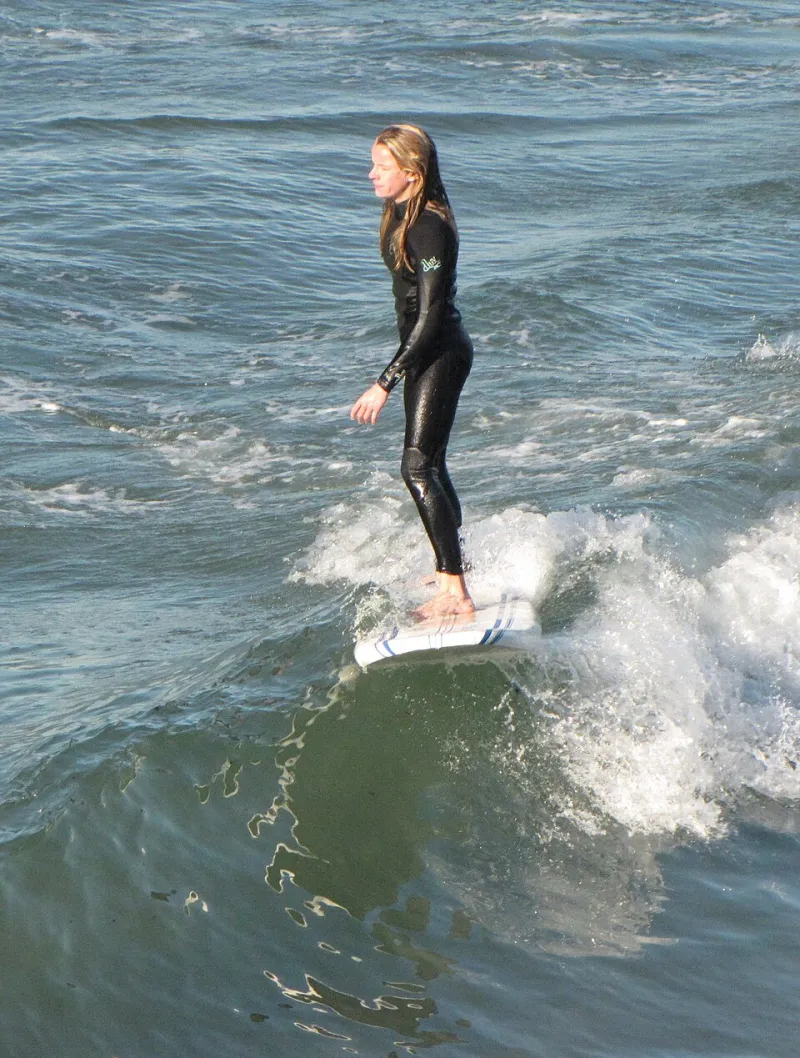
Photo: Unknown authorUnknown author, Public domain, via Wikimedia Commons
The first time Marcus Webb stood up on a surfboard, he cried.
He wasn't embarrassed about it. Neither was anyone else on the beach that morning in Virginia Beach, Virginia. Marcus, a 34-year-old Army veteran who did two tours in Afghanistan and came home carrying things that don't show up on X-rays, had been told by a counselor to try a local surf therapy program. He'd been skeptical. He'd tried a lot of things.
"I didn't think standing on a piece of foam in the Atlantic Ocean was going to do anything," he says. "But when I actually did it — when I was actually balanced on the wave — everything else went quiet. For about three seconds, there was nothing in my head except that wave. That was the first time that had happened in years."
Marcus is one of thousands of Americans who have found something unexpected and genuinely transformative through therapeutic surfing programs. What started as a grassroots idea — get struggling people into the water, see what happens — has grown into a legitimate and increasingly well-documented field that sits at the intersection of mental health care, community building, and the kind of pure, unfiltered joy that surfing has always offered.
From Fringe Idea to Recognized Practice
The origins of organized surf therapy in the United States are hard to pin to a single moment, but programs like the Challenged Athletes Foundation, Surfers Healing (which focuses on children with autism), and Operation Surf have been doing this work for over two decades. What's changed in recent years is the level of clinical attention the practice is receiving.
Researchers at institutions including San Diego State University and the University of Southern California have begun publishing peer-reviewed studies on the psychological effects of surf therapy. Results have been consistent enough to turn heads: participants in structured programs report measurable reductions in PTSD symptoms, depression, and anxiety. They also report gains in self-efficacy, social connection, and something researchers somewhat clinically describe as "positive affect" — which, in plain English, means they feel better about being alive.
Dr. Cynthia Torres, a licensed clinical psychologist who consults with several surf therapy nonprofits on the West Coast, explains why the ocean environment is particularly powerful. "You cannot ruminate effectively in the water," she says. "The sensory demands of surfing — the noise, the physical challenge, the need to read the wave in real time — pull you into the present moment in a way that's almost impossible to replicate in a clinical setting. It's involuntary mindfulness."
That phrase — involuntary mindfulness — is something a lot of surfers will recognize instinctively without ever having framed it that way. Anyone who's spent time in the lineup knows that the ocean has a way of making your problems feel temporarily irrelevant. The wave doesn't care what happened to you last year. It just requires your full attention, right now.
On the Ground in San Diego
Waves of Wellness is a San Diego-based nonprofit that runs surf therapy programs specifically for veterans and active-duty military personnel dealing with PTSD and traumatic brain injury. On a Tuesday morning in early spring, their weekly session is running at a break in Coronado that program director Lena Okafor has used for years.
The group is small — eight participants, three certified instructors, two volunteer surfers from the local community. There's no clinical detachment to the scene. It looks, from a distance, exactly like any other beginner surf lesson. People falling off boards. People laughing. People helping each other up.
That's partly the point.
"We're not trying to make this feel like therapy," Lena says. "We're trying to make it feel like surfing. The therapeutic outcomes happen because of the experience, not because we've turned it into a clinical exercise."
The participants range in age from their mid-twenties to early fifties. Some are there because their VA counselor suggested it. Some heard about it from a friend who went through the program. A few are on their third or fourth session; one man, a former Marine named Derek, is on his thirtieth.
"I come because it's the one place where nobody's treating me like I'm broken," Derek says, watching the water between sets. "Everybody here is just trying to surf. That's it."
Expanding the Circle
Veterans are a significant part of the surf therapy landscape, but far from the only population these programs serve. Organizations like Surfers Healing have for years been running free surf camps for children on the autism spectrum, with results that have moved parents to tears and drawn national media attention. The program's founder, Israel Paskowitz, started it because of his own son — and what began as a personal act of love has since touched tens of thousands of families across the country.
Other programs focus on survivors of domestic violence, youth aging out of foster care, individuals in addiction recovery, and people managing eating disorders. The common thread isn't the diagnosis — it's the experience of doing something physically demanding in a natural environment alongside other people who are also trying.
In Rockaway Beach, New York, a program called Shore Thing runs sessions through the summer for teenagers from underserved communities in the five boroughs, many of whom have never been in the ocean before. Program coordinator Amara Johnson notes that the transformation she sees isn't always dramatic. Sometimes it's subtle — a kid who wouldn't talk to anyone in week one who's cracking jokes with the group by week four.
"Surfing gives people a reason to keep showing up," she says. "And when you keep showing up, community happens. That community is sometimes the most healing thing of all."
What the Wave Offers
Back in Virginia Beach, Marcus Webb is now a volunteer assistant at the same program that changed things for him. He shows up on Saturday mornings and helps first-timers figure out where to put their feet on the board.
He doesn't oversell it. He doesn't tell people it'll fix everything. He just tells them what he knows from his own experience: that the ocean asks something of you, and when you give it, you get something back that's hard to name but impossible to forget.
"Three seconds of quiet," he says. "That's all it took for me to want to come back. And then I kept coming back. And now here I am."
The wave doesn't know his history. It doesn't know anyone's. It just keeps coming, and for a lot of people, that's exactly what they need.