Locals Know: The Real Code Behind Every American Surf Break
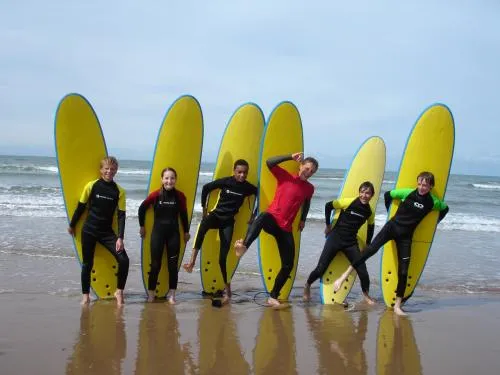
Photo: CountryCousins1951, CC BY-SA 4.0, via Wikimedia Commons
There's a version of surf localism that lives in legend — the slashed tires, the aggressive drop-ins, the cold stares from the parking lot. And sure, that stuff exists. But spend enough time talking to the people who actually built these surf communities, and a more complicated picture starts to emerge.
We reached out to longtime regulars at breaks stretching from the Pacific Coast Highway to the Jersey Shore, asking one simple question: what do you actually want from visitors? The answers were candid, occasionally surprising, and almost never what the internet would have you believe.
It's Not About Where You're From
Rincon, the so-called Queen of the Coast, draws surfers from all over California and beyond. Pete Alonzo has been surfing the point since the mid-90s and runs a small board repair shop nearby. He's seen every kind of visitor imaginable.
"People think we hate out-of-towners," he says, leaning against a rack of freshly glassed boards. "We don't. What we hate is entitlement. There's a difference."
That distinction — between geography and attitude — came up again and again in our conversations. At Trestles in San Clemente, a spot notorious for its competitive vibe, a group of regulars we spoke with were quick to separate the tourists they respected from those they didn't. "The ones who show up, read the lineup, wait their turn, and say thanks when they get a good one? We love those people," said one surfer who asked to remain anonymous. "The ones who paddle straight to the peak and act like they own it? That's where things get tense."
The Currency of Respect
In the water, respect is a kind of currency, and it's earned in small denominations. At Rockaway Beach in Queens — a break that's built one of the most diverse and community-driven surf scenes in the country — longtime local and surf instructor Dominique Harris put it plainly: "You earn respect by giving it first."
For Harris, that means watching before paddling out. It means acknowledging the unspoken hierarchy without being weird about it. It means not snaking waves from people who've been sitting in the lineup longer than you have. "None of that is complicated," she says. "It's just basic human decency applied to the ocean."
At breaks like Sebastian Inlet on Florida's Space Coast, where the local surf culture runs deep and the competition for waves can be fierce during good swells, the expectations feel a little more formalized. Regulars there describe a kind of invisible orientation period — a window where new faces are observed before they're truly welcomed. "You don't get to be a regular in one visit," explained one veteran who's been surfing the inlet for over 20 years. "But if you come back, act right, and show you care about the place, people notice."
Region-Specific Rhythms
One thing that stood out across every conversation was how much the local culture shapes what "respectful" actually looks like. It's not a universal standard — it's hyper-local.
On the North Shore of Oahu, which draws American pros and aspiring surfers from the mainland every winter, the expectations are well-documented and largely non-negotiable. Paddle into a wave that isn't yours, and the consequences are social at best, physical at worst. But at smaller, lesser-known breaks along the Gulf Coast — places like the sandbars off Pensacola or the occasional hurricane swell that rolls through Galveston — the vibe is almost the opposite. "We're just happy anyone's out here," laughed one surfer we caught in the parking lot at a break she'd rather not name. "Show up with a smile and we'll probably invite you to the bonfire."
The Outer Banks of North Carolina occupies its own strange middle ground. It's a place with a proud and fiercely independent surf identity, but one that's also built on welcoming the waves that storms and geography occasionally deliver. Locals there talked about a shared sense of earned access — the idea that surfing a fickle, sometimes dangerous coastline creates its own kind of fraternity. "If you're out here in October when it's firing and there's nobody else around, you're one of us," said one regular from Kill Devil Hills.
What Actually Burns Bridges
When we pressed people on what genuinely bothered them — the things that would make them actively unwelcoming — a few consistent themes emerged.
Dropping in without looking. Paddling around others to cherry-pick sets. Treating the ocean like a photo backdrop rather than a shared resource. And perhaps most universally: being loud and oblivious about it all.
"The worst visitors are the ones who think they're the main character," said Pete from Rincon. "They're filming everything, hooting at themselves, acting like the whole break exists for their content. Meanwhile they're burning everyone around them and don't even notice."
Dominique in Rockaway put a finer point on it: "We've worked really hard to make this a welcoming place. When someone comes in and disrupts that, it's not just annoying — it's disrespectful to the whole community that built it."
The Welcome That's Always There
Here's the thing that rarely makes it into the hot-take articles about localism: most surfers genuinely want to share the stoke. The regulars we talked to weren't territorial for sport. They were protective of something they'd invested in — not just time in the water, but years of showing up for beach cleanups, mentoring beginners, advocating for coastal access, and building the kind of culture that makes a break worth surfing in the first place.
"I want people to love this place," said the North Carolina regular from Kill Devil Hills. "I just want them to love it the way we love it. Quietly. Humbly. With some awareness of where they are."
That's the unwritten rule, really. Not a checklist, not a hazing ritual — just the simple ask that you show up like a guest who actually gives a damn about the house.
Do that, and the lineup opens up. It always has.