Wheels to Waves: How Skateboarding Is Quietly Transforming American Surf Culture
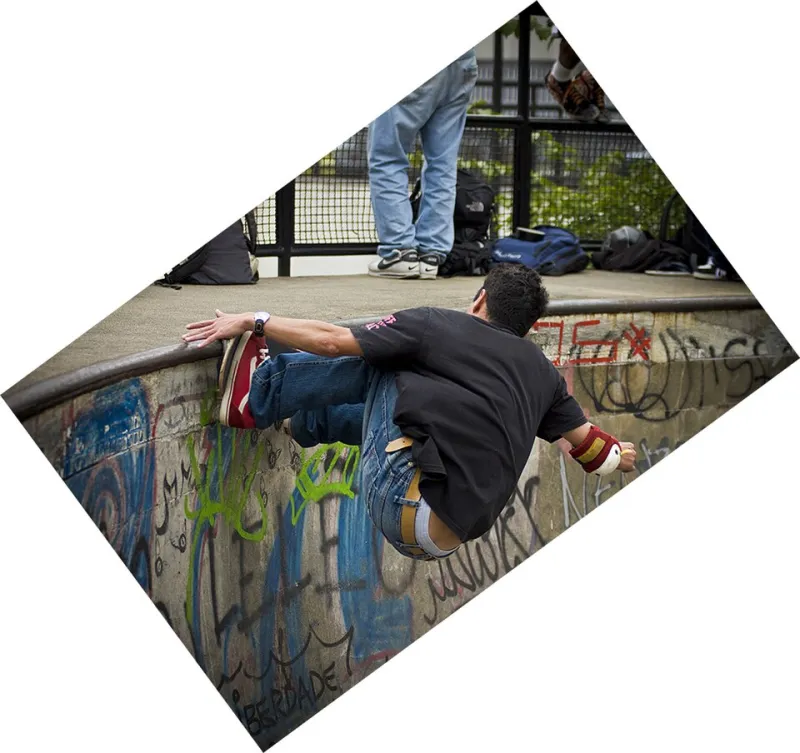
Photo: Alex Carvalho from Rio de Janeiro, Brasil, CC BY-SA 2.0, via Wikimedia Commons
Two Tribes, One Heartbeat
Walk through any decent skate park on a flat-spell Wednesday and you'll notice something. Half the kids carving bowls aren't just skaters — they're surfers killing time until the swell fills in. The grip tape, the slang, even the music pumping out of a beat-up Bluetooth speaker: it all blurs together into something that doesn't belong entirely to either world.
That blur has a name now. People inside both communities are calling it the "crossover culture," and it's quietly becoming one of the most exciting things happening in American action sports.
Surfing and skateboarding have always been cousins. Surfers invented sidewalk surfing back in the 1950s when California waves went flat. But for decades the two scenes drifted apart — surf culture headed toward beaches, sponsorships, and professional competition circuits, while skateboarding carved its own identity around urban rebellion and street credibility. Today, those roads are merging again, and the results are genuinely compelling.
The Skate Park as Training Ground
Ask any surfer in a landlocked city — Denver, Austin, Columbus — and they'll tell you the same thing: the skate park is where you go to stay sharp. Bowl skating in particular translates directly to surfing. The way you read the transition, the way your body weight shifts into a bottom turn, the timing of a lip hit — it's almost identical to what you're doing on a wave.
Jordan Reyes, a 24-year-old from Austin who grew up skating before ever touching a surfboard, made his first trip to the Texas Gulf Coast two summers ago. "I dropped in on my first wave and honestly it felt familiar," he says. "The muscle memory from the bowl just kicked in. I wasn't good, but I wasn't starting from zero either."
This kind of crossover story is playing out all over the country. Surf coaches in beach towns increasingly recommend skate sessions to students working on their pop-up and balance. Some surf schools have even started incorporating skateboard ramps into their onshore training programs — a practical acknowledgment that concrete and fiberglass share more than aesthetics.
Brands Building Bridges
The business world noticed this overlap before most people did. Brands like Vans, Volcom, and Stance have spent decades straddling both worlds, sponsoring pro surfers and pro skaters under the same roof. But a newer wave of smaller, independent companies is doing something more intentional — building their entire identity around the intersection.
Labels like Pilgrim Surf + Supply in Brooklyn and Saturdays NYC have created retail spaces that treat surf and skate as one unified lifestyle, not separate departments. You can buy a single fin longboard next to a deck graphic that looks like it belongs in a skate mag from 1987. The aesthetic is cohesive because the philosophy behind it is cohesive.
Even board shapers are getting in on it. A handful of custom shops on the East Coast are now collaborating directly with skate deck artists to design board graphics, treating the surfboard blank the same way a skater treats a blank deck — as a canvas for personal expression.
Shared Ethos, Shared Energy
Beyond the gear and the training overlap, what really connects these two tribes is something harder to quantify: a shared attitude toward progression and creativity. Neither culture has ever been particularly interested in doing things the conventional way. Both reward style as much as technical execution. Both have a deep suspicion of anyone who takes themselves too seriously.
That shared ethos is creating real community bonds. In cities like Portland, Seattle, and Chicago, informal groups have formed around the idea of "skate-to-surf" culture — organizing combined sessions, film screenings, and art shows that celebrate both disciplines without ranking one above the other.
Sam Deluca, who runs a small action sports collective in Portland called Concrete Tide, puts it plainly. "The surf community can get territorial sometimes — you have to earn your place in the lineup, prove you belong. Skate culture has that too, but there's also this thing where if you're out there trying, people respect it. We wanted to build something that felt more like that second vibe."
Concrete Tide hosts monthly events that combine skate demos with surf film nights, drawing crowds that don't fit neatly into either category. A lot of attendees, Deluca says, are people who've never surfed but are curious — and the skate connection gives them a comfortable entry point.
Growing the Scene From the Ground Up
That last point matters a lot when you're talking about growing surfing as a culture, not just a sport. One of the consistent challenges facing surf's grassroots community is accessibility. Not everyone lives near a beach. Not everyone can afford lessons, travel, and equipment right out of the gate.
Skateboarding, by contrast, has one of the lowest barrier-to-entry profiles in all of sports. Public skate parks are free. A used deck and some trucks cost less than a single surf lesson. And crucially, skate parks exist in communities across the entire country — rural towns, inner cities, suburbs — places where surfing has historically had almost no presence.
By leaning into the skate-to-surf pipeline, surf culture gains something it's always struggled to develop: a genuine feeder system from the inland United States. Kids who fall in love with the feeling of carving a bowl, who grow up watching surf clips between skate edits on YouTube, who adopt the aesthetic and the mindset — they become surfers the first time they get to a coast. The culture travels with them.
What the Parade Looks Like Now
Surfboards on Parade has always believed that surf culture is bigger than any one beach, any one break, any one kind of board. The crossover with skateboarding is one of the clearest examples of that in action right now — a living, breathing reminder that the stoke doesn't stop at the shoreline.
The communities aren't merging into one homogeneous thing. Skaters are still skaters. Surfers are still surfers. But the conversation between them is louder and more productive than it's been in years, and the grassroots culture coming out of that conversation is genuinely exciting to watch.
Next time you're at the skate park and you see someone working a bowl like they're riding a point break, maybe don't be surprised. They probably are.