Drop In, Press Play: The Songs That Define Where You Surf
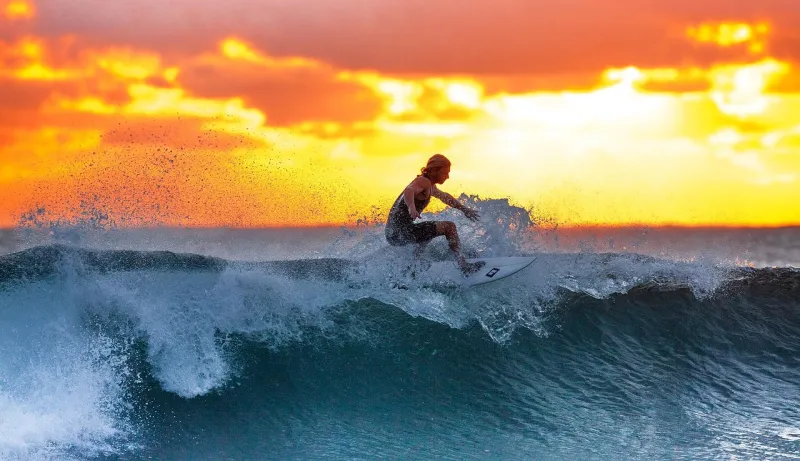
There's a parking lot at a well-known Southern California break where, on any given Saturday morning, you'll hear at least three different musical universes colliding before the sun clears the horizon. One truck is running classic surf rock — twangy, reverb-soaked guitar that sounds like it was recorded in 1963 (because it probably was). A van two spots over has something that sounds like a lo-fi bedroom pop playlist bleeding through half-open windows. And somewhere near the trail down to the sand, a portable speaker is absolutely thumping reggaeton.
Nobody's fighting about it. Everyone's paddling out.
That's the thing about surf music in 2024 — it's not one sound anymore. It never really was, if you're being honest. But right now, the relationship between what surfers listen to and how they identify as surfers feels more deliberate, more personal, and frankly more interesting than it has in decades.
The Dick Dale Revival Nobody Saw Coming
Ask a 22-year-old surfer in Encinitas what's on their pre-session playlist and there's a decent chance you'll hear a name that would've surprised you five years ago: Dick Dale. The so-called King of the Surf Guitar, who passed away in 2019, has found a completely new audience among younger surfers who discovered his tremolo-heavy sound through algorithmic rabbit holes, record store crate digs, and — perhaps most surprisingly — TikTok.
"I found 'Misirlou' because of Pulp Fiction first, honestly," admits Jade Reyes, a 20-year-old longboarder from Oceanside. "But then I started going deeper and found all this older stuff, and it just felt like surfing in a way that nothing else did. Like, more than actual modern surf music."
That authenticity gap is something musicians and cultural observers have been noticing for a while. The original surf rock of the early 1960s wasn't made to be background noise — it was made to conjure the physical sensation of riding a wave. The tremolo picking mimicked the flutter of a board on chop. The reverb created space, made things feel oceanic. When you hear it standing next to your board in the morning, something clicks.
Bands like La Luz, Allah-Las, and Entrance have been carrying that torch for years, blending the vintage California sound with modern indie sensibilities. But the resurgence feels bigger now, more grassroots, driven less by tastemakers and more by surfers themselves just... sharing what they love.
Playlists as Local Identity
Here's something that doesn't get talked about enough: the playlist has become a form of community flag-planting.
In beach towns up and down the East and West Coasts, shared Spotify playlists have quietly become a way for local surf crews to define their vibe, welcome newcomers, and signal who they are. It's not unlike the way a local break has its own unwritten rules and rhythms — the playlist is just the sonic version of that.
Marco Delgado, a DJ and lifelong surfer based out of New Smyrna Beach, Florida, has been building and sharing surf playlists for about four years. What started as something he made for himself — a mix of reggae, dub, and '70s soul to match the slower, more meditative pace of Gulf Coast swells — turned into something his whole crew started running on their speakers.
"People started asking me to make playlists for specific conditions," he says, laughing. "Like, 'Make one for a flat day when we're just hanging.' Or 'Make one for when it's actually pumping.' And I realized — yeah, the music does change how the whole session feels. It's not background noise. It's the energy."
Marco's observation tracks with something musicians who surf tend to understand intuitively: music doesn't just accompany an experience, it shapes it. The tempo affects how you move on the beach. The mood of a song can make you paddle out harder or hang back and watch. A familiar track can bond a group of strangers in a lineup faster than almost anything else.
When the Vibe Becomes the Brand
Surf brands have always known this. The carefully curated playlists at trade shows, the music choices in surf films — these aren't accidents. But what's shifted is that the power to curate has moved from marketing departments to the surfers themselves.
Small surf shops have picked up on this. Walk into a good independent shop on the Oregon Coast or in the Florida Panhandle and the music playing isn't random. It's intentional, a reflection of who shops there and what the local scene values. Some shops have started hosting live music nights, blurring the line between retail space and community gathering spot.
In Wrightsville Beach, North Carolina, a shop called Sweetwater Surf Shop has been doing acoustic sets in their back room on Friday evenings through the summer for three years running. "It started because a couple of our regulars were in a band," says shop employee Tess Kowalski. "Now it's just part of what we are. People come to hang out and end up buying a leash or whatever, but mostly they come because it feels like their people."
That's the connective tissue here — music as a social glue for surf communities that might otherwise only see each other in the water.
The Session Soundtrack
None of this is entirely new, of course. The Beach Boys built a mythology around California surf culture that shaped how the entire country imagined the sport for decades. Surf films from the 1960s and '70s treated their soundtracks as seriously as their cinematography. Jack Johnson basically became the unofficial sound of mellow, soulful surfing for a generation.
But the streaming era has democratized all of it. Every surfer is now their own music director, assembling a personal soundtrack that reflects their influences, their mood, and their community. The result is a richer, more fragmented, more honest picture of what surf culture actually sounds like in America right now.
It sounds like Dick Dale through a Bluetooth speaker at dawn. It sounds like reggaeton bumping from a lowered truck. It sounds like lo-fi hip-hop drifting over a flat afternoon and acoustic guitar on a Friday night in a surf shop that smells like wax.
It sounds like stoke, basically. Just in a hundred different keys.