From the Shore to the Lineup: The Mentors Making Surfing Belong to Everyone
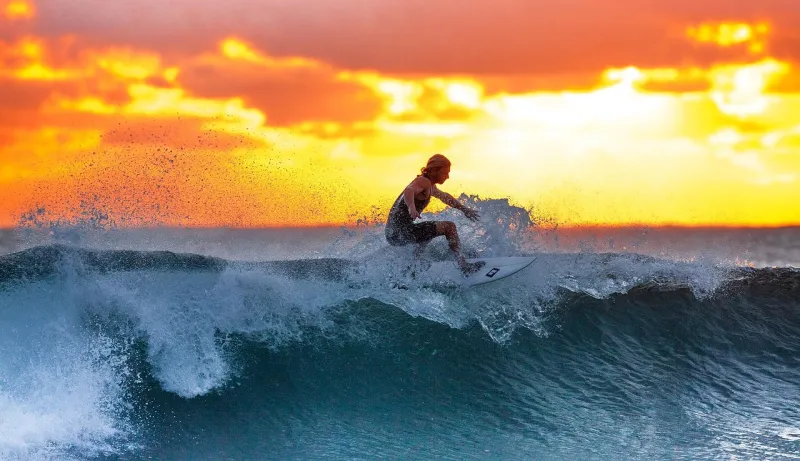
Photo: surf instructor teaching child to surf on beach community program, via cdn.pixabay.com
There's a moment that every surfer remembers — the first time a wave actually picks you up and carries you. It doesn't matter if you rode it for two seconds or twenty. Something shifts. People who've been through it describe it in almost spiritual terms: a feeling of being chosen by the ocean, of belonging to something larger than yourself.
Now imagine experiencing that moment when you spent most of your life believing the ocean wasn't really for you.
That's the experience that mentorship programs across the United States are working to create, deliberately and consistently, for people who've historically been left out of surf culture. Urban youth who've never seen a board up close. Adults with physical and cognitive disabilities. Veterans processing trauma. Families living in coastal communities where the beach has always felt like someone else's territory.
The wave doesn't care who you are. These programs are making sure more people get to find that out.
Building the Bridge
Surf mentorship looks different depending on where you are and who's running the program, but the core idea is consistent: pair an experienced surfer with someone new, stay with them through the awkward parts, and create enough safety — physical and emotional — for a real connection to the sport to take root.
Surf City Groms in Huntington Beach, California, has been running structured mentorship sessions for low-income youth since 2018. Founder and lifelong surfer Darnell Okafor started the program after noticing that the beach a few blocks from some of the city's most under-resourced neighborhoods might as well have been in another state for many of the kids growing up there.
"The ocean was right there," Okafor says. "But there were all these invisible walls. Equipment costs, transportation, not knowing anyone who surfed, feeling like you'd stick out. We just started removing the walls one at a time."
The program pairs each participant with a dedicated mentor for a full eight-week session — not just a one-day clinic, but a sustained relationship built around regular time in the water. Boards and wetsuits are provided. Transportation is coordinated. And mentors are trained not just in surf instruction but in how to be genuinely present with a young person who may be navigating a lot more than learning to pop up on a board.
What Sustained Mentorship Actually Does
One-day surf events are wonderful. They generate stoke, they introduce people to the feeling of the water, and they create memories. But the programs making the deepest impact are the ones that stick around long enough to see what happens after the novelty wears off.
Jamila Torres was 14 when she went through Surf City Groms. She'd grown up in a family that didn't surf and had never considered it something available to her. "The first day I was terrified," she says. "I fell off like 40 times. But my mentor, she just kept being there. She never made me feel stupid. By week three I caught a real wave and I completely lost it — I was crying and laughing at the same time."
Jamila is now 19 and volunteers as a junior mentor with the same program. That cycle — participant becomes mentor — is one of the most powerful things these programs produce. It's how surf culture actually grows from the inside rather than just expanding at the edges.
Adaptive Surfing and the Mentors Who Show Up
In Virginia Beach, a program called Wave Riders Adaptive has been working since 2020 to connect surfers with physical and cognitive disabilities with trained mentors who specialize in adaptive technique. The program partners with local surf schools and the city's parks and recreation department to run monthly sessions from late spring through early fall.
Program coordinator Simone Park, herself a competitive adaptive surfer, emphasizes that the mentorship model is essential — not optional — for this population. "You can't just hand someone an adaptive board and step back," she says. "The relationship is the whole thing. When a participant trusts their mentor, they take risks. They try again after falling. They come back the next month."
Participant stories from Wave Riders Adaptive have a recurring theme: the ocean doing something for people that other therapies and programs couldn't quite reach. Veterans who struggled with crowded environments finding peace in the water. Adults with autism spectrum disorder discovering a physical activity that fits the way their nervous systems work. Parents of kids with Down syndrome watching their children experience a kind of freedom they'd never seen before.
"The ocean is a great equalizer," Park says. "It doesn't care about your diagnosis. It just responds to what you do. That's incredibly empowering for people who spend a lot of their lives being told what they can't do."
The Gear Gap and How Programs Are Closing It
One thing every successful mentorship program has figured out: you can't build belonging if people have to show up empty-handed and borrow everything while feeling like a burden. The programs doing this well have invested in communal gear libraries — boards, wetsuits, leashes, rash guards — that participants can access without paperwork or awkwardness.
Some programs have gotten creative with funding. Gear donations from surf shops and retiring competitive surfers. Small grants from coastal municipalities and state parks departments. Crowdfunding campaigns backed by the broader surf community. A few have partnered with brands directly, turning corporate surf sponsorship dollars toward something with genuine community impact.
The result is that showing up to your first session doesn't require anything except a willingness to try. That's a meaningful shift.
Mentorship as Cultural Change
At its heart, what these programs are doing isn't just teaching people to surf. They're changing the story of who surfers are and who the ocean belongs to.
For a long time, American surf culture carried a pretty narrow image — one that didn't reflect the actual diversity of the country's coastline or the communities living along it. Mentorship programs are the grassroots mechanism for rewriting that image, not through marketing or branding, but through real relationships and real waves.
When Jamila Torres paddles out at Huntington Beach now, she's not a guest in someone else's culture. She's part of it. She helped build it. And she's bringing the next person along with her.
That's the stoke that doesn't fade.