Every Break Has Its Own Bible: The Hidden Cultures That Rule American Surf Spots
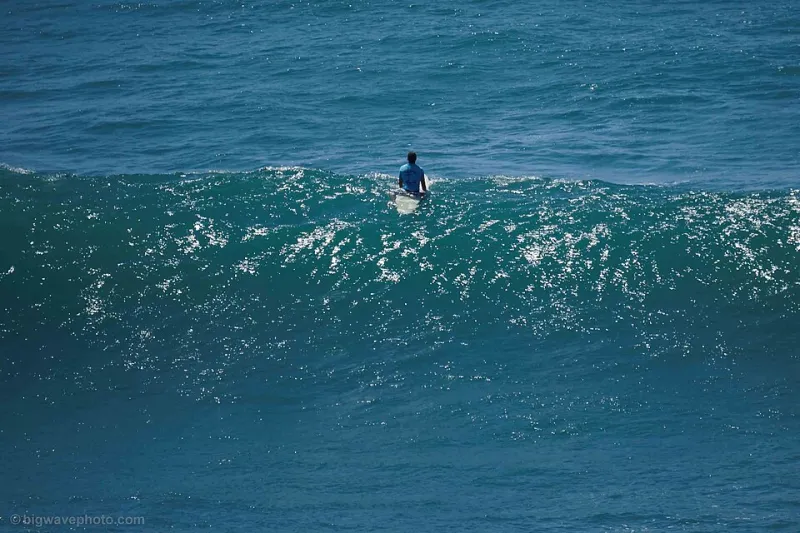
Photo: bigwavephoto, CC BY-SA 4.0, via Wikimedia Commons
There's a moment every traveling surfer knows. You've paddled out somewhere new, you're sitting in the lineup, and you realize — fast — that something is different here. The vibe. The rotation. The way people look at you, or don't. Nobody handed you a pamphlet. Nobody explained the rules. But the rules are absolutely there, and you're already being graded on whether you know them.
Surf breaks don't just produce waves. They produce cultures. And those cultures are some of the most fascinating, hyper-specific social ecosystems in American sports.
Malibu: The Church of the Longboard
Ask anyone who's surfed First Point Malibu and they'll tell you the same thing: it's a place with opinions. Specifically, opinions about how you should be riding your board.
Malibu has been a surf destination since the 1950s, and that history sits heavy in the water. The longboard reigns here — not just as equipment, but as philosophy. Cross-stepping to the nose isn't showing off; it's expected. Dropping in on a clean Malibu point wave on a shortboard and fading straight to the flats? You'll catch looks that could peel wax.
"There's a reverence for traditional style out here that you don't find everywhere," says one Malibu regular who's been surfing First Point for over two decades. "It's not that shortboarders aren't welcome. It's that this wave was built for walking. People who understand that get embraced. People who don't — they figure it out."
The crowd at Malibu is notoriously dense and the wave notoriously long, which means the unwritten priority system is intricate. Knowing where to sit, when to go, and how to carry yourself on a wave here is practically a graduate course in surf etiquette. The culture rewards patience and punishes aggression with cold, collective silence.
Cocoa Beach: Florida's Working-Class Lineup
Swing north and east to Florida's Space Coast and the whole social temperature changes. Cocoa Beach doesn't have Malibu's mythological weight or Hawaii's intimidation factor. What it has is a blue-collar surf culture that takes pride in riding whatever the Atlantic throws at it — and not making a big deal about any of it.
"We get two-foot slop most of the time and we're stoked anyway," laughs a lifelong Cocoa Beach local who learned to surf on a foam board behind Ron Jon Surf Shop. "Nobody out here is precious about what board you ride or how you ride it. You show up, you surf, you don't snake people, and you're good."
That lack of pretension is itself a cultural value. Cocoa Beach surfers tend to roll their eyes at the kind of lineup posturing you'd see at more famous breaks. The vibe is inclusive in a way that's genuinely earned — partly because the waves don't self-select for advanced surfers, and partly because the community built itself around accessibility from the beginning. Kelly Slater grew up here, and locals will tell you that his famously relaxed, everyone's-welcome public persona tracks directly with how Cocoa Beach raised him.
The unwritten rule in Cocoa Beach isn't about style or hierarchy. It's simpler: don't be a kook about it.
The North Shore: Where the Hierarchy Is Real
And then there's Oahu's North Shore, where the stakes — and the waves — are something else entirely.
Places like Pipeline, Sunset, and Backdoor operate on a social structure that's been forged over decades and reinforced by the genuine danger of surfing them. This isn't about snobbery. It's about survival. At Pipe, a wrong move doesn't just ruin someone's wave. It can put someone in the hospital.
"The pecking order exists because it has to," explains a North Shore regular who's been surfing the Seven Mile Miracle since the early 2000s. "When waves are fifteen feet and breaking on a reef that'll take your skin off, you need to know who's got priority and you need to respect it. That's not attitude. That's how people don't get hurt."
Local knowledge at the North Shore is earned slowly and visibly. Newcomers — even accomplished ones — are expected to sit wide, observe, and wait. The hierarchy is enforced not through confrontation (usually) but through the quiet physics of who sits deepest and who gets looked at before a set arrives. Disrespect the order and the ocean tends to do the correcting.
The culture here also carries a deep current of Hawaiian pride that mainland visitors sometimes misread as hostility. It isn't, exactly. It's a community protecting something sacred — both the waves and the culture that grew up around them.
Why Geography Shapes Everything
What's striking, when you start comparing these places, is how much the wave itself shapes the culture around it.
Malibu's long, peeling point wave rewards patience and style — so the culture values patience and style. Cocoa Beach's unpredictable, democratic beach breaks reward adaptability and good humor — so the culture values adaptability and good humor. The North Shore's powerful, consequence-heavy slabs demand respect and hierarchy — so the culture is built on respect and hierarchy.
The wave teaches the lesson. The community enforces it over generations.
"Every break is basically a long-running social experiment," says one surf anthropologist who has spent years documenting regional surf cultures across the US. "The conditions select for certain behaviors, the early adopters model those behaviors, and then the culture crystallizes around them. By the time a newcomer shows up fifty years later, they're inheriting something with real depth — even if nobody can fully explain where it came from."
Reading the Room Before You Paddle Out
For traveling surfers, all of this adds up to a single practical truth: do your homework before you paddle out anywhere new.
Watch from the beach. Not for five minutes — for twenty. Notice where people sit. Notice who goes on which waves. Notice the body language. Is the vibe loose and jokey? Is it focused and serious? Are people cheering each other or is the lineup quiet and competitive?
Talk to people in the parking lot. Buy something at the local shop. Ask questions that show you're genuinely curious, not just trying to extract information about where the best peaks are.
And when you finally do paddle out, start conservative. Don't assert yourself immediately. Let the lineup show you how it works before you decide where you fit in it.
The culture of any given break is a living thing — built by the people who've shown up day after day, season after season, decade after decade. When you paddle out somewhere new, you're a guest in that culture. The fastest way to earn a real welcome is to act like you know it.
Every break has its own bible. The surfers who thrive are the ones who bother to read it.