Likes, Barrels, and Identity: What Goes Viral Isn't Always What's Real
The Camera Was Already Rolling Before You Paddled Out
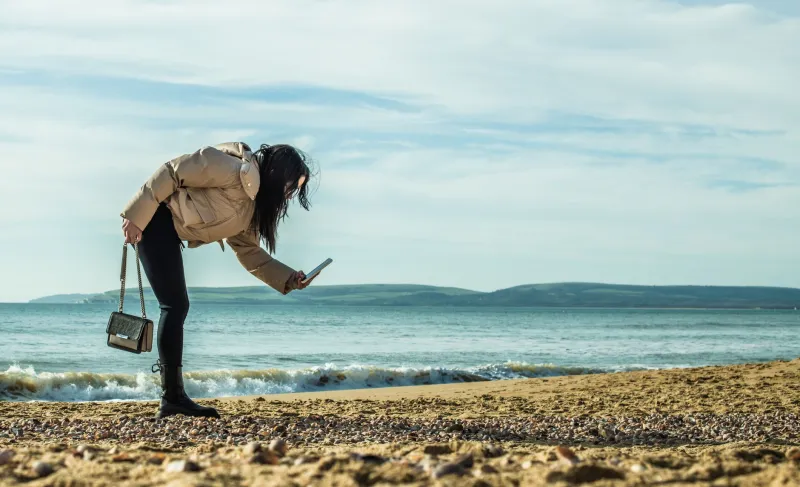
There's a moment most longtime surfers recognize. You're sitting in the lineup, waiting on a set, and you notice someone on the beach with a drone humming overhead, a friend with a long lens, maybe a GoPro strapped to a buddy's helmet nearby. The session hasn't even started, but it's already being produced.
This is modern surf culture in a lot of American breaks — and depending on who you ask, it's either the best thing that ever happened to the sport or a slow erosion of everything that made it worth loving in the first place.
Social media didn't invent surfing, obviously. But it fundamentally rewired what surfing means to a whole generation of people who discovered it through a screen before they ever touched a board. And now that the culture is living partly online, the community is figuring out — sometimes awkwardly — what that changes.
When the Feed Becomes the Break
Ask Marcus Delray, a 34-year-old regular at a mid-Atlantic beach break in Virginia Beach, what he thinks about surf content online, and he'll laugh before he answers. "It's wild," he says. "I've been surfing this spot for twelve years. Some guy comes out for a week, gets one clean barrel on camera, posts it, and suddenly he's got 80,000 followers and people are asking him for tips."
Marcus isn't bitter about it, exactly. He gets it. Algorithms reward spectacle, not consistency. A year of quiet, incremental improvement doesn't move the needle the way one perfect ten-second clip does. "The ocean doesn't care about your follower count," he adds, "but the culture is starting to."
That tension — between what the water rewards and what the internet rewards — is showing up in lineups from San Diego to the Outer Banks. Surfers who built their credibility over years of showing up are watching a new kind of status emerge, one that's built on visibility rather than skill or longevity.
The Newcomer Effect
Here's the flip side, and it matters. For a lot of surfers — especially those who didn't grow up near the coast, didn't have family in the culture, or didn't fit the traditional image of who a surfer is supposed to be — viral content was the door that let them in.
Jasmine Torres, a 26-year-old from Phoenix who now surfs out of Huntington Beach, says she found surfing entirely through Instagram. "I grew up in the desert," she explains. "I had no connection to the ocean. But I kept seeing these videos of women who looked like me surfing, and something just clicked. I drove to the coast the next summer and signed up for a lesson."
Three years later, she's out in the water four days a week and runs a small social account documenting her own learning curve — including the wipeouts, the frustration, the bad days. "I try to show the real stuff," she says, "because that's what I needed to see when I was starting out. Not just the perfect barrels."
Jasmine's story is increasingly common. Social media has democratized the image of surfing in ways the industry alone never fully managed. When the only faces in surf media were professional athletes and sponsored models, the culture sent a pretty clear message about who it was for. Now anyone with a phone and a wave can participate in the conversation.
Performance Anxiety in the Lineup
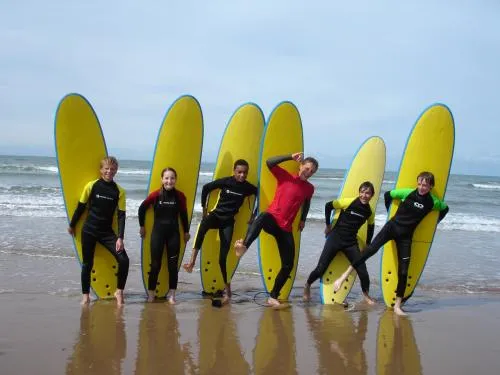
But there's a cost to all that visibility, and it shows up in subtle ways. Longtime instructors at surf schools across California and Florida have noticed something in recent years: beginners arrive with a very specific idea of what surfing should look like, shaped almost entirely by what performs well online. They want to skip the whitewater. They're embarrassed by longboards. Some of them are more anxious about being filmed struggling than they are about the actual learning process.
"I had a kid last summer — maybe nineteen — who almost quit after his first session because he didn't think the video looked good enough to post," says one instructor at a surf school near San Clemente who asked to remain anonymous. "He wasn't thinking about whether he had fun. He was thinking about the content."
That's a strange kind of pressure to bring to the ocean, and it's one that previous generations of surfers never really had to navigate. The stoke used to be its own reward. Now, for some people, it doesn't fully count unless it's documented.
What Actually Makes a Surfer
The community doesn't agree on this, and honestly, it probably shouldn't have to. Surfing has always contained multitudes — longboarders and shortboarders, soul surfers and competitors, wave hogs and generous souls who'll call you into the best set of the day. The idea that there's one correct version of a "real" surfer has always been more gatekeeping mythology than truth.
What social media has done is make that argument louder and more visible. The debates that used to happen in parking lots or over post-session tacos now happen in comment sections, where they're permanent and public and occasionally vicious.
Dan Whitfield, a shaper out of Encinitas who's been building boards for over two decades, has a more philosophical take. "Every generation thinks the generation after them is doing it wrong," he says. "Groms on shortboards thought longboarders were kooks. Now everyone's mad about content creators. The ocean is still the ocean. It'll sort people out."
There's something reassuring in that. The water doesn't grade on virality. You can't algorithm your way through a heavy shore break or fake your way through a real swell. Eventually, the people who stay are the people who actually love it — camera or no camera.
Riding the Wave You're On
Maybe the most honest thing to say about the viral era of surfing is that it's complicated in the same way the culture has always been complicated. It brings in new voices and new energy. It also creates new hierarchies and new anxieties. It opens doors while sometimes making the room feel smaller.
What it hasn't changed — and what communities like this one keep coming back to — is the actual feeling of a wave moving under you, the moment when everything else drops away and it's just you and the water and whatever second you're living in right then.
No filter makes that better. No algorithm can manufacture it. And no number of followers can replace the simple, stubborn fact of showing up, paddling out, and putting in the time.
The parade goes on. The question is just whether you're in it for the float or the crowd watching from the sidewalk.