More Than a Logo: The Surf Brands Turning Transactions Into Tribe
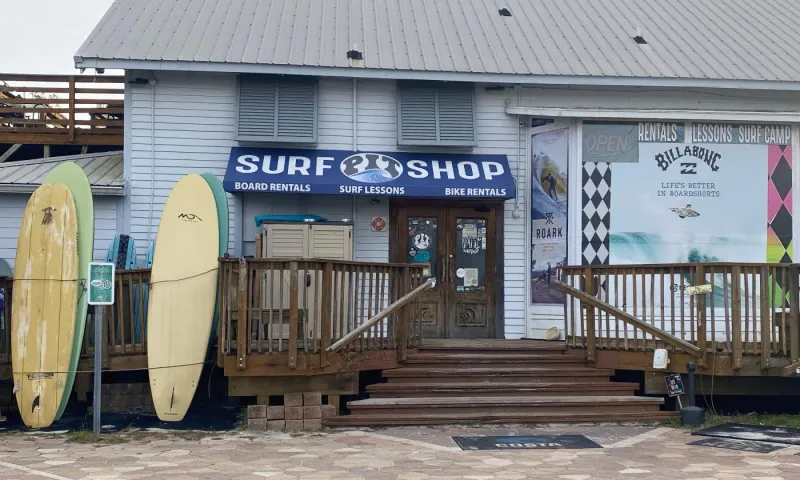
Photo: surf brand pop-up event beach community gathering outdoor festival, via www.visitstaugustine.com
There's a pop-up happening this weekend in a parking lot off Pacific Coast Highway. A local shaper is demoing hand tools. A photographer is pinning prints to a clothesline strung between two vans. Someone's kid is getting their first lesson on a foam board borrowed from a bin near the tailgate. And somewhere in the middle of all of it, a brand name is quietly stitched onto a banner — not screaming for attention, just present.
This is what surf culture looks like when a company actually means it.
Across the US, a growing number of independent and mid-size surf brands are stepping back from the traditional retail playbook and leaning hard into something older and more honest: community. Not the word on a marketing deck, but the real thing — people gathering around a shared obsession, swapping stories, passing on knowledge, and celebrating the water that connects them.
Why the Sale Is Only the Beginning
Ask Ryan Calloway, co-founder of a small San Diego-based brand that makes single-fin longboards and hosts monthly beach cleanups paired with informal surf clinics, and he'll tell you the transaction is almost beside the point.
"We sell boards, sure," he says, leaning against his truck at a recent Saturday event. "But if someone buys a board and never comes back, we failed. The goal is for them to feel like they joined something."
That philosophy isn't unique to Calloway. From the Pacific Northwest to the Florida Panhandle, a wave of smaller surf companies is building their identities around events, education, and genuine cultural celebration rather than aggressive sales funnels. The result is a customer base that feels less like a market segment and more like a crew.
And surfers notice the difference fast.
"You can tell within about five minutes whether a brand actually surfs or just sells to people who do," says Mara Delgado, a regular at a monthly board swap hosted by a Florida shop that also runs free beginner paddling sessions. "The ones that are real — their events feel like something you'd go to even if you weren't buying anything."
The Pop-Up as Cultural Statement
The pop-up event has become one of the most effective tools in the grassroots brand arsenal, and not because it moves product fast. A well-run pop-up does something more valuable: it creates a memory.
Brands doing this well tend to follow a few instincts. They keep things informal. They invite local talent — photographers, shapers, artists, musicians — and give them real space rather than a corner booth. They make the event feel like it belongs to the community, not to the company. And they show up consistently, not just once before a big product launch.
One brand operating out of the Pacific Northwest runs what they call "Shore Sessions" — quarterly outdoor gatherings that combine board demos with panel talks on ocean conservation, local surfing history, and mental health in the surf community. Attendance has grown steadily without a single paid advertisement. Word spreads because the events are worth showing up to.
"We don't do giveaways or raffle prizes," explains the brand's founder, who asked to remain anonymous to keep the focus off the company and on the community. "If people only come for a chance to win something, that's not really a community. We want people to come because the conversation is worth having."
Workshops That Teach the Whole Culture
Beyond events, some brands are going deeper with workshops that connect surfing's physical practice to its broader cultural roots. Shaping clinics, surf photography workshops, ocean safety courses, and even sessions on surf history and board design are showing up in the calendars of brands that see themselves as stewards of the culture rather than just vendors within it.
In Encinitas, a small collective runs monthly shaping workshops out of a converted garage, with materials partially subsidized by a local board company. The sessions are open to anyone — beginners who've never held a planer, longtime surfers curious about the craft, and everything in between. Participants leave with knowledge, not just product.
"Teaching someone to shape, even just the basics, changes how they look at every board they ever ride," says one of the workshop instructors. "It connects them to the lineage. That's what we're really passing on."
That sense of lineage — of belonging to something with roots — is exactly what separates the most respected brands from the ones that feel like surf-themed fashion labels.
The Corporate Gap
For all the energy in the independent scene, it's worth acknowledging what the bigger players often get wrong. Large surf corporations have the budgets to run massive events, sponsor tour stops, and plaster their logos across every visible surface. What they frequently can't replicate is the feeling of authenticity that comes from a founder who actually paddles out, or a team that lives in the same zip code as their customers.
The gap isn't always about size. It's about investment — not financial, but personal. When a brand founder shows up to their own event, talks to attendees without a PR handler nearby, and makes decisions based on what the local surf community actually needs rather than what a quarterly report requires, people feel it.
"I've been to big brand activations and I've been to stuff run out of the back of a van," says Delgado. "The van wins every time. Every single time."
Building Something That Outlasts the Season
The brands making the biggest cultural impact aren't chasing virality. They're building slowly, showing up repeatedly, and letting the community define what the brand means over time. That's a longer game, and it's harder to measure in impressions or conversion rates. But the loyalty it generates is a different category of relationship entirely.
When surfers feel like a brand genuinely belongs to the culture — when they see it at the beach cleanup and the shaping demo and the local contest and the paddle-out — the commercial relationship almost becomes secondary. They buy because they want to support something they believe in, not because an ad caught them at the right moment.
That's the parade Surfboards on Parade has always been about: the ongoing, rolling celebration of surf culture in all its forms, moving through communities and carrying everyone along with it.
The best brands aren't watching from the sidewalk. They're in the parade.
And from what we're seeing up and down the American coastline, more of them are figuring out exactly how to march.